I have always loved fashion, but the older I get, the less interested I am in simply buying what is new.
For me, the real excitement is finding something that has already lived a life.
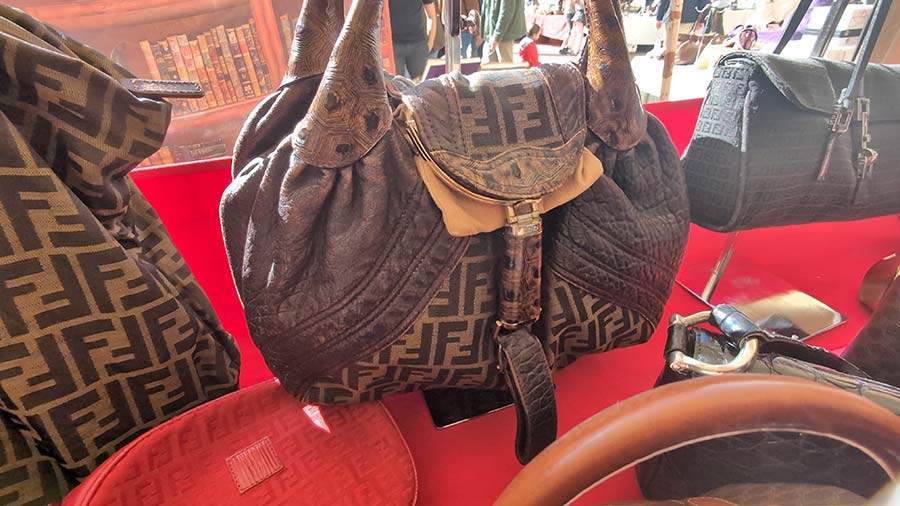
A pair of Salvatore Ferragamo heels from 1994. Heavy 1980s Ferragamo earrings. Vintage Yves Saint Laurent bijoux. Beautifully made leather shoes. An unusual Fendi bag that everybody else has somehow scrolled past.
These are the pieces that excite me.
And one of my favourite places to hunt is Vestiaire Collective.
The secret?
I am often not looking at what was listed yesterday.
I am looking at pieces that have been sitting there for months — sometimes even years.
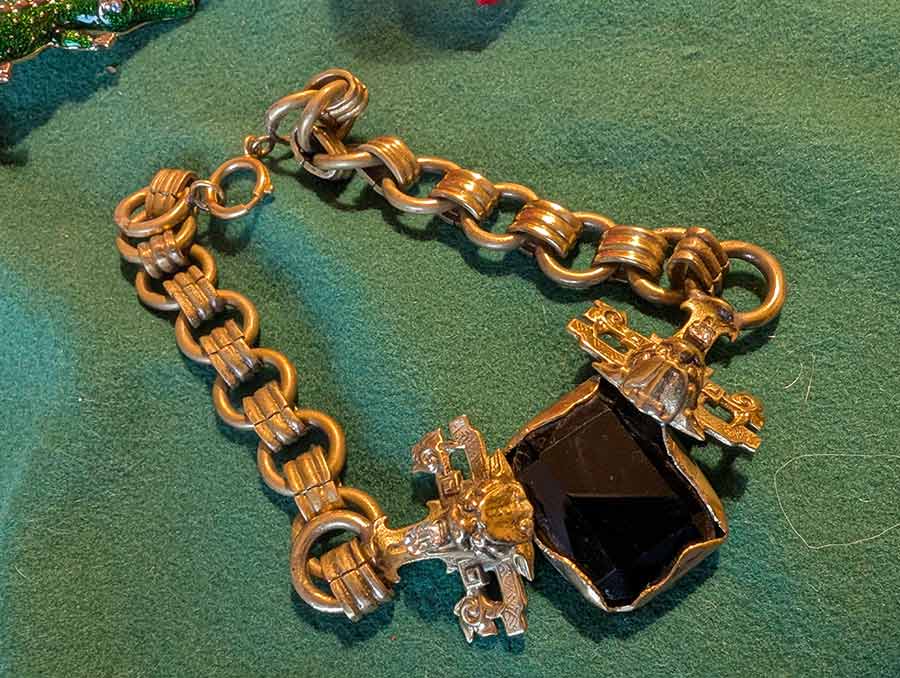
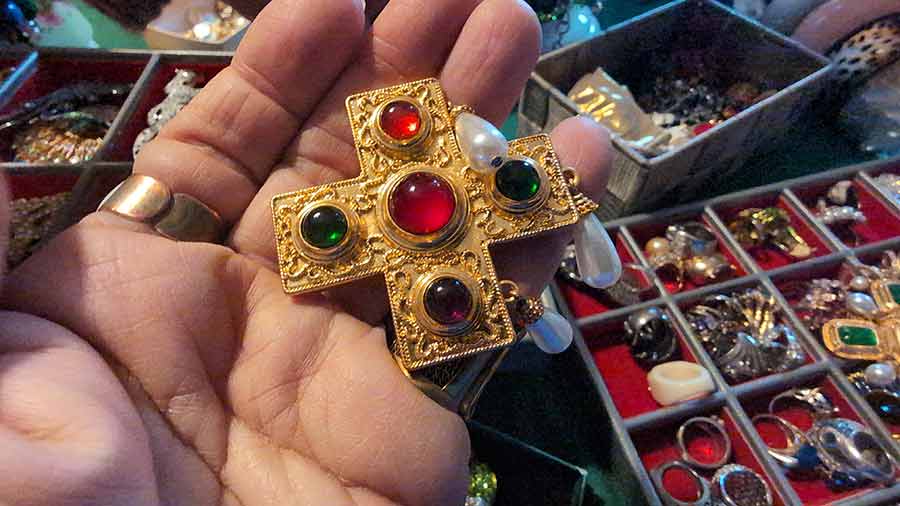
The Forgotten Listings Can Be the Best Ones
When most people shop online, they instinctively look at the newest arrivals.
I often do the opposite.
If something has been sitting on Vestiaire for six months, a year or even longer, I become curious.
Why has nobody bought it?
Sometimes there is absolutely nothing wrong with the piece. Perhaps the photographs are terrible. Maybe the seller chose the wrong title. Perhaps it is from an era that is not currently trending.
Or maybe everyone is simply searching for the same five handbags while an extraordinary piece of fashion history is sitting quietly three pages deeper.
That is where I like to shop.
Vintage hunting requires imagination.
You have to be able to look beyond somebody’s badly lit bedroom photograph and imagine the item styled properly.
A shoe photographed on a carpet may look completely uninspiring.
Put that same shoe with a beautifully cut trouser, vintage blazer, jewellery and the right handbag and suddenly you understand it.
My 1994 Salvatore Ferragamo Heels
One of the reasons I love vintage Ferragamo is the craftsmanship.
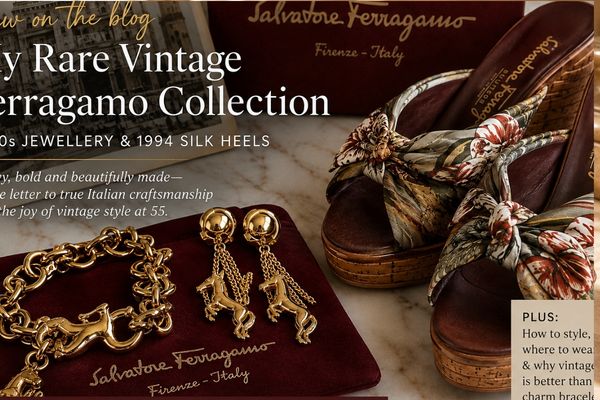
I own a wonderful pair of Salvatore Ferragamo heels from 1994, combining silk, leather and cork.
They feel completely different from so many shoes being produced today.
The proportions, the materials and even the way they sit on the foot remind me of a period when luxury footwear was about much more than displaying a logo.
That is what I look for in vintage.
I want a piece to make me stop and examine it.
Look at the heel.
Look at the stitching.
Look at the lining.
Look at how the materials have been combined.
Turn the shoe upside down.
Look at the sole.
Vintage shopping should be tactile, even when you are initially doing it through a screen.
Zoom in.
Study everything.
Never Ignore Vintage Jewellery
Another category I think people underestimate is vintage costume jewellery.
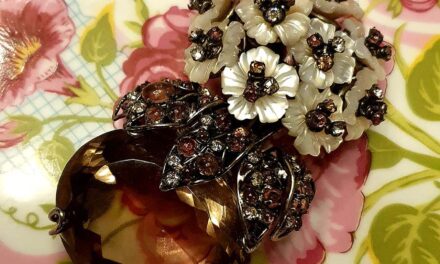
I have 1980s Salvatore Ferragamo earrings that are substantial, bold and beautifully made.
This was an era when accessories were supposed to be noticed.
And that is exactly why I love them.
I would rather own one fabulous pair of vintage earrings with personality than a drawer full of pieces I will forget about next season.
The same applies to 1980s Yves Saint Laurent jewellery.
Vintage YSL bijoux can completely transform an outfit.
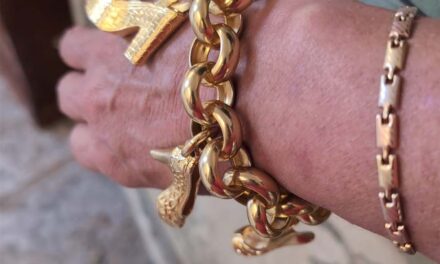
Take something incredibly simple — black trousers, a white shirt, perhaps a blazer — and add a powerful gold-toned vintage necklace, earrings or bracelet.
Suddenly the jewellery becomes the fashion.
That is one of my biggest vintage-shopping tips:
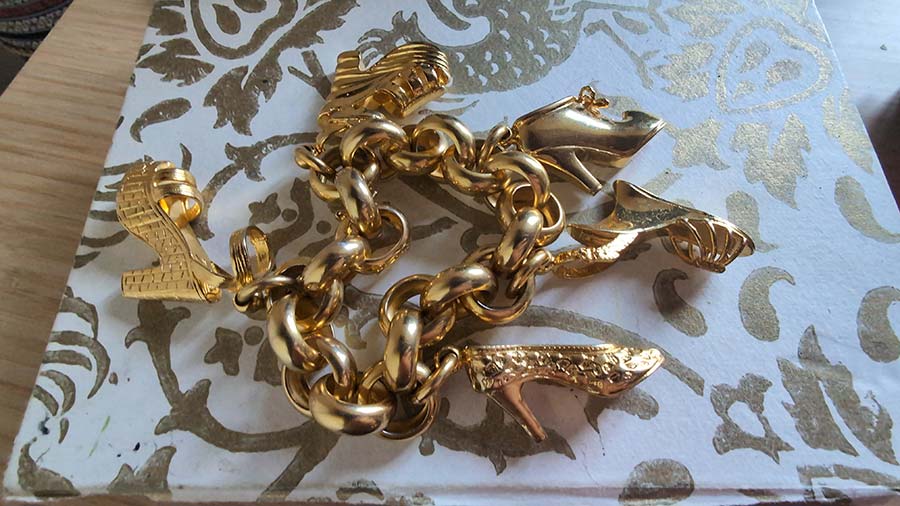
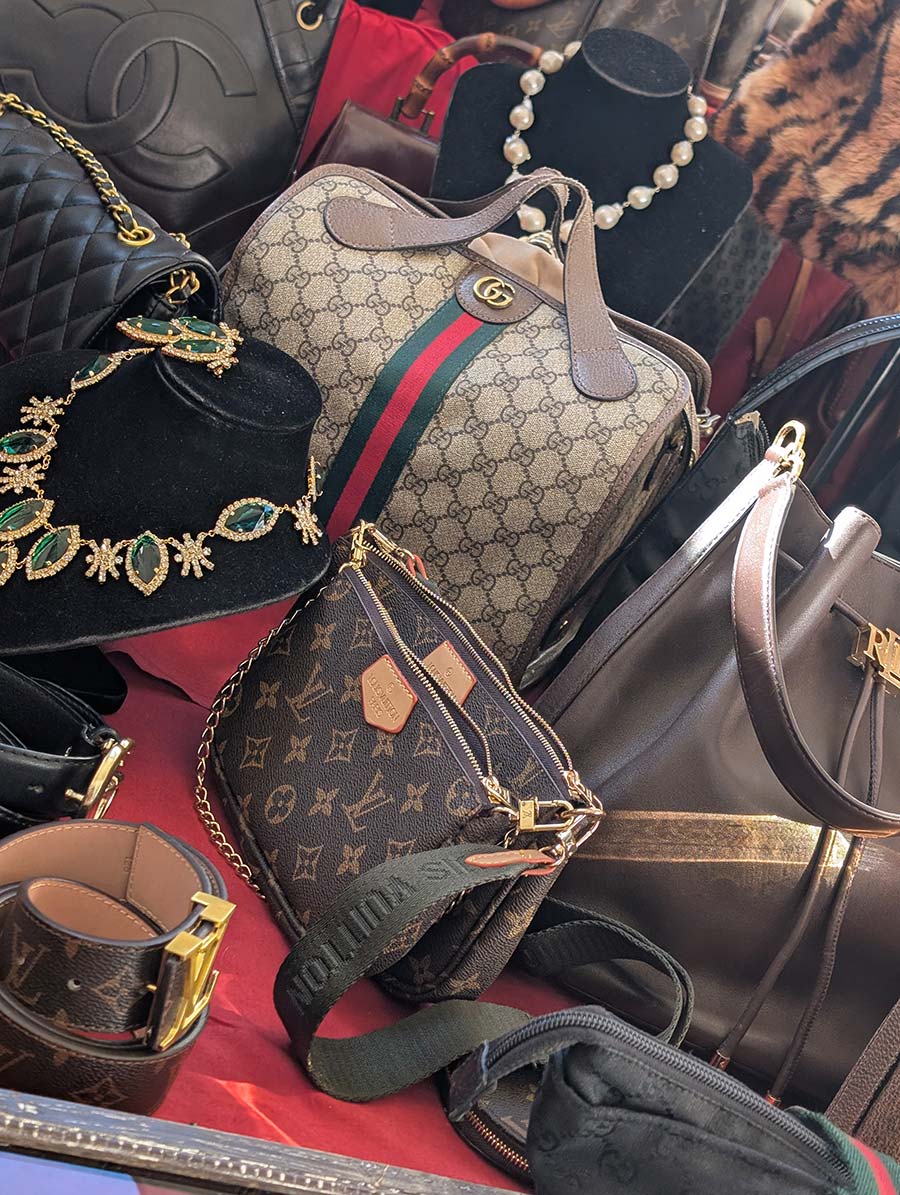
Do not only look for clothes.
Look at jewellery.
Look at belts.
Look at shoes.
Look at scarves.
Look at handbags.
Accessories are often the easiest way to introduce vintage into a modern wardrobe.

Build a Bijoux Wardrobe
I think of jewellery almost like clothing.
I have a bijoux wardrobe.
Certain earrings work with certain handbags. A bracelet might pick up the hardware of a shoe. Gold jewellery might completely change the mood of a black dress.
When you begin shopping this way, you stop buying individual objects and start building a collection.
This is particularly useful with vintage because you can connect decades.
A pair of 1980s earrings does not mean you need to dress like it is 1985.
Wear those earrings with a contemporary oversized white shirt.
Put a vintage YSL bracelet beside a modern watch.
Carry a vintage handbag with jeans.
Mix it.
That contrast is what makes vintage look modern.
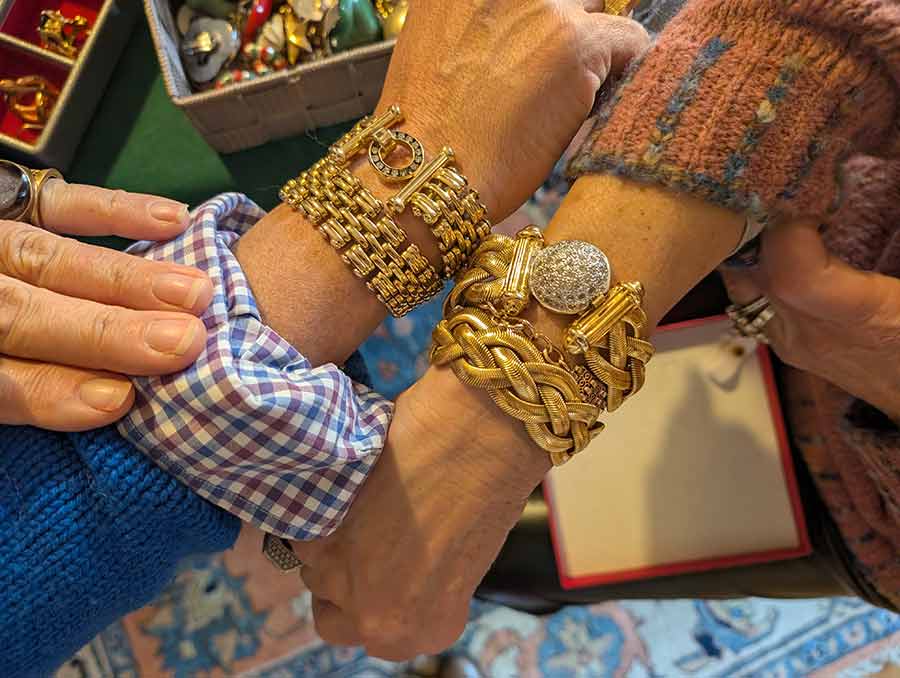
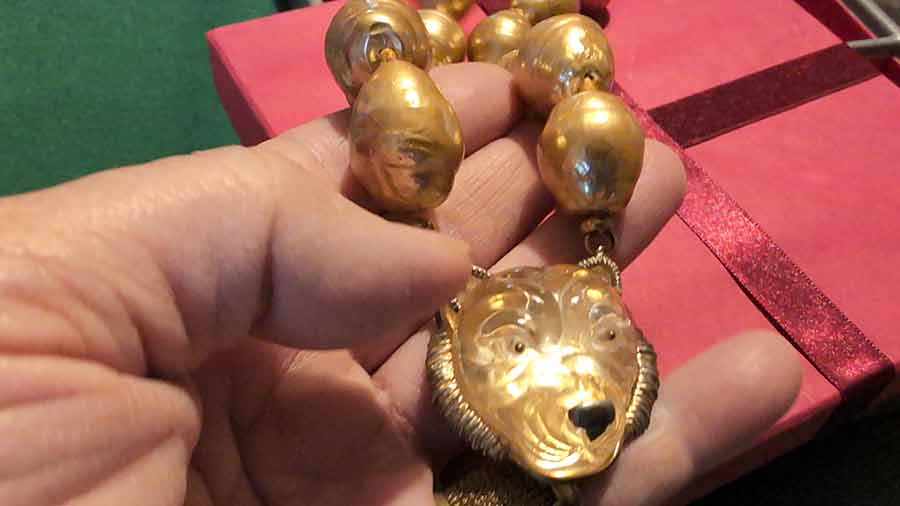
Look Beyond the Obvious Designer Bags
Everybody searches for famous handbag models.
Chanel.
Hermès.
Louis Vuitton.
Fendi.
But within these houses there are hundreds of shapes, materials and collections that receive far less attention.
That is where I start searching.
With Fendi bags, for example, I am interested in unusual shapes, older hardware, interesting leather and pieces that clearly belong to another design period.
I don’t need everybody else to recognise the model.
In fact, sometimes I prefer that they don’t.
There is something much more stylish about someone asking, “Where did you find that?” than instantly knowing it is the bag they saw ten times on Instagram that morning.
Price Does Not Automatically Equal Style
This is particularly important now.
You can easily see fashion shoes priced at €1,200.
Fendi sock-style shoes, for example, can enter that luxury price territory.
But a €1,200 price tag does not automatically make something more stylish than a beautiful vintage pair you discovered for a fraction of that amount.
That is the difference between buying luxury and developing personal style.
Luxury can be purchased.
Style has to be discovered.
I am far more interested in finding the unexpected piece.
My Rules for Spotting Vintage Gems
When I search Vestiaire and other resale platforms, these are some of the things I look for.
First, search by material, not only by designer.
Try silk, suede, leather, velvet, raffia, enamel, woven leather, gold-tone bijoux or cork.
Second, search different eras.
1980s jewellery can be incredible.
1990s shoes can have beautiful proportions.
Early 2000s fashion is also becoming increasingly interesting.
Third, deliberately look at old listings.
If something has been online for a long time, don’t assume other shoppers rejected it because there is something wrong with it.
Study it yourself.
Fourth, look at condition carefully.
Vintage does not have to mean destroyed.
I look for pieces that have been cared for, particularly when buying shoes and bags.
Some wear can be charming.
Damage is different.
Fifth, examine construction.
With shoes, look at the heel, sole, lining, stitching and leather.
With handbags, inspect corners, handles, hardware, interior and structure.
With jewellery, look at clasps, weight, finish and whether stones or decorative elements are missing.
And finally, ask yourself one important question:
Can I already imagine three ways I would wear it?
If the answer is yes, I become very interested.
Don’t Be Afraid of Fashion That Isn’t Trending
This may be my biggest piece of advice.
Trends can actually make vintage shopping more expensive.
The moment everyone decides a particular 1990s bag is fashionable again, prices rise.
I like shopping just outside that spotlight.
Look at what people are ignoring.
Look at the shapes that haven’t returned yet.
Look at the designer collections nobody is currently talking about.
That is often where the magic is hiding.
Vintage Gets Better As Your Style Gets Stronger
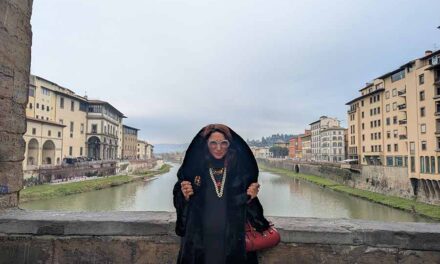
I am in my fifties, and one thing I appreciate more now is knowing what I actually like.
I don’t need fashion to tell me every season.
That makes vintage shopping much more enjoyable.
My Ferragamo shoes don’t have to be from the latest collection.
My 1980s earrings don’t need to look new.
My YSL bijoux doesn’t need to appear on a current runway.
If I love it, I wear it.
And that, ultimately, is why I buy vintage.
Every piece feels more personal.
There is the thrill of finding it, the history behind it, the quality of the craftsmanship and then the challenge of styling it in your own way.
So next time you are scrolling through Vestiaire, don’t just look at what everybody else is buying.
Go deeper.
Look at the listings that have been sitting there for months.
Search the forgotten designers and forgotten collections.
Zoom into the details.
Study the materials.
And above all, trust your own eye.
Because sometimes the best vintage gem isn’t the piece everybody wants.
It is the piece everybody else missed.