Audrey Hepburn’s Iconic Ballet Flats: A Timeless Classic Reimagined
How Salvatore Ferragamo’s ballet flat, the 1954 design Audrey Hepburn wore, is made by hand near Florence and reworked under Maximilian Davis.
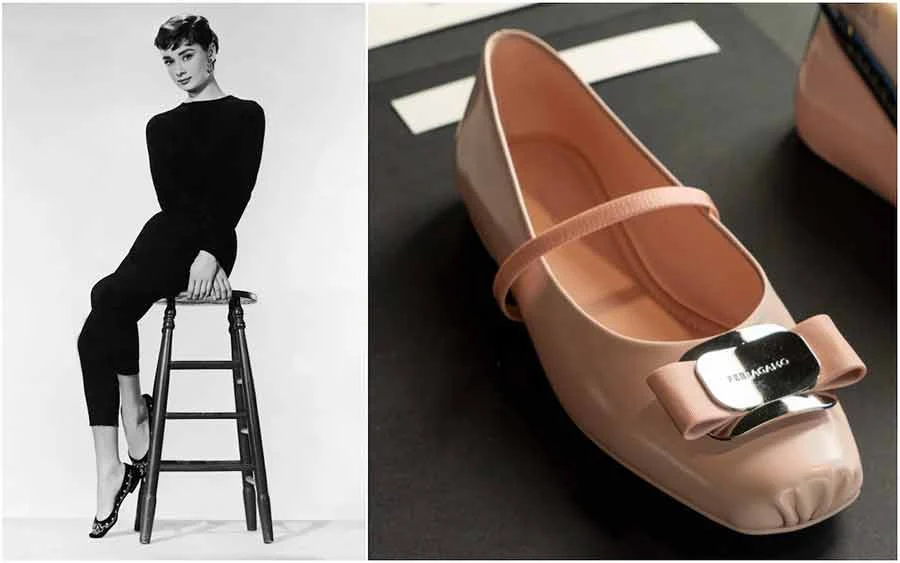
Ballet flats look like a simple wardrobe staple, but at Ferragamo, the Italian shoe house, reworking a classic is no small job. Its shoes were worn by some of the best-known women of the last century. Eva Perón addressed the crowds in hers, Marilyn Monroe perfected her walk in a pair, and Audrey Hepburn wore them on the cobbled streets of Rome. Wallis Simpson wore them too.
For nearly a century Ferragamo has made shoes for Hollywood and for the European aristocracy: Katharine Hepburn’s sturdy flats, Grace Kelly’s heels, Greta Garbo’s stilettos, Sophia Loren’s kitten heels. Many of them are now on show in the Ferragamo Museum, in the medieval basement of the Gothic Palazzo Spini Feroni in Florence.

The legacy of Salvatore Ferragamo
Salvatore Ferragamo was born in Bonito, near Naples, the eleventh of fourteen children. He went to Hollywood in MGM’s golden era, and there his shoemaking became known around the world. The Palazzo Spini Feroni, above the museum, shows how far he came: vaulted ceilings with frescoes, marble columns, and a chapel where, in the 1950s, his craftsmen made shoes in front of a gilded altar.
Production today looks very different. The shoes are made in a large modern factory in an industrial area near Florence airport, and that is where the ballet flat Audrey Hepburn loved is still made. Under the creative director Maximilian Davis the 1954 design has been reworked, with angular heels among the changes, and it remains a bestseller.
Crafting the perfect ballet flat
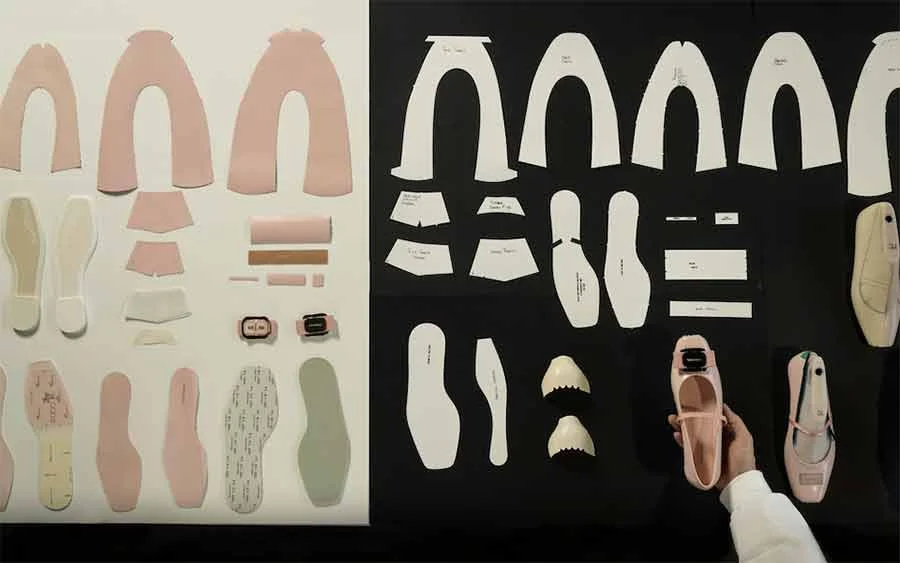
Inside the factory, Ferragamo’s red walkways run above the workrooms. The leather comes from Santa Croce sull’Arno, near Florence, a town known for the quality of its hides. Cutting combines digital precision with the human hand. Laser beams mark the best placement on the hide, to keep waste down, and each piece is then cut by hand, often by someone with decades of experience.
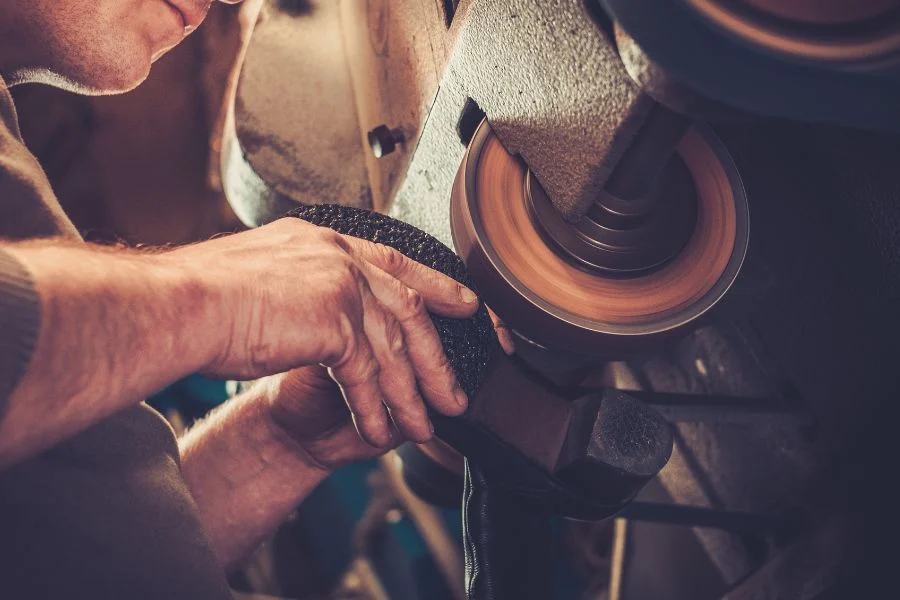
Salvatore Ferragamo studied anatomy in America, and it shaped his view that a shoe must be comfortable as well as stylish. Ferragamo’s own wooden lasts are carved from blocks of hornbeam to match digital blueprints. Then the leather is stretched, smoothed and moulded over the last by hand, much as a pasta maker kneads dough. Steam and heated vents relax the leather so that it takes the shape.
The insole is riveted by hand, and smoothing machines take out any imperfections. Last, a special adhesive is applied and activated under red lamps, to bond the sole to the upper.
The art of simplicity
Ferragamo’s elegante section handles the house’s most refined designs, the ballet flats among them. Simple designs need the most skill, because there is nowhere to hide a mistake. A discrepancy of one millimetre can spoil the line of the shoe.
To work on these flats a craftsman needs at least seven to nine years of experience. The upper has to be wrapped around the last without a flaw. The bows, the trimmings and the stamped Ferragamo emblem are added by hand at the end.
Under Maximilian Davis the team can now produce a prototype in two days, though balancing new ideas with traditional craft remains delicate. As Davis has put it: “Every product takes time and expertise. Sometimes things don’t work out, but the beauty of creating lies in trial and error. There’s almost 100 years of craft behind every pair, and over 15,000 designs in our archives. Every shoe tells a story.”