The Devil Wears Prada 2 – Wearing Pinstripe Suits To Promote The Film
Why Emily Blunt and Meryl Streep wear pinstripes and suiting for The Devil Wears Prada 2, and how the pinstripe suit came to stand for power.
There is nothing accidental about a pinstripe suit. Not in fashion, and not in film promotion. When Meryl Streep and Emily Blunt step back into the world of The Devil Wears Prada 2 in sharp tailoring, the subject is no longer a pretty red-carpet dress. It is authority, money, publishing and luxury.
Much of what follows is as the Telegraph reported it. Its fashion team followed the looks of the press tour.
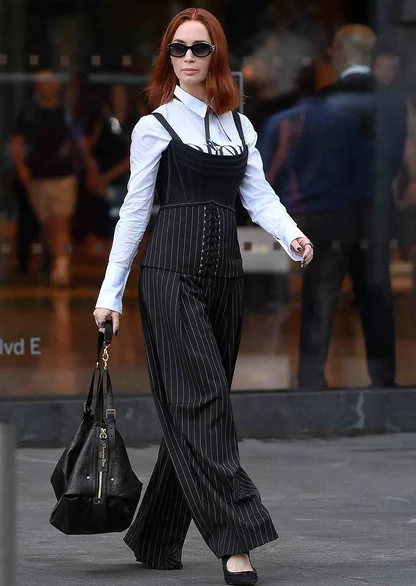
Photo: The Telegraph
In The Devil Wears Prada 2, the fashion is part of the story
Disney’s own synopsis places Miranda Priestly back in a changing magazine industry, facing a mature Andy Sachs and an Emily Charlton who is now described as a major player at a luxury brand. The film arrives almost twenty years after the original made Runway magazine a fictional fashion empire that people still quote.
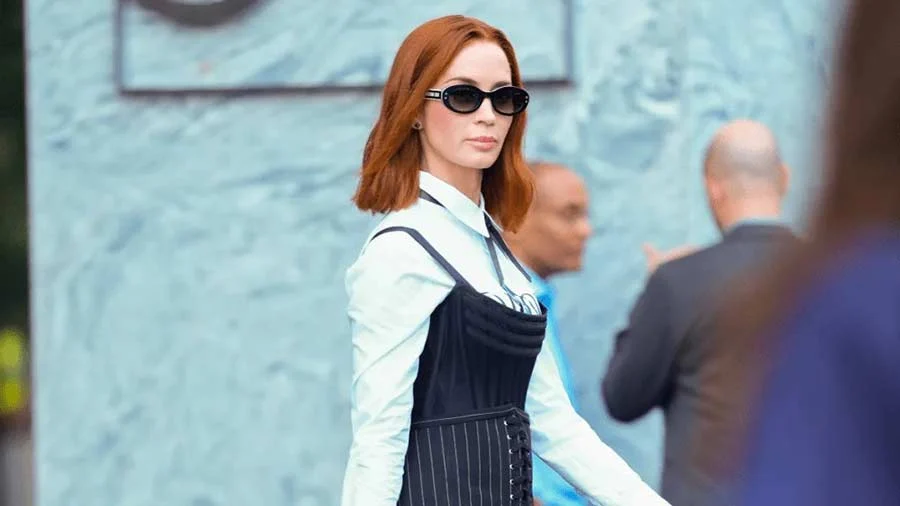
Emily Blunt’s return as Emily Charlton in pinstripes is telling. In early set images she was photographed in black-and-white pinstripes with a white shirt, a corseted top, wide trousers, sunglasses and a large black bag. Entertainment Weekly described it as a shoulder-to-toe black-and-white pinstripe look, and InStyle noted the corseted pinstripe trousers, the Dior shirt and the vest top.
This is not the young assistant any more. This is Emily grown into power. The pinstripe tells us she has moved from the frantic outer office into the boardroom. She no longer takes messages. She makes decisions.
Meryl Streep, meanwhile, has worn suiting throughout the press tour. W Magazine noted that it has been a staple for her during the promotional run, including black tailored Celine and a double-breasted red Prada suit with wide-leg trousers. Even when it is not a literal pinstripe, it speaks the same language: disciplined tailoring, control and command.
Why the pinstripe?
The pinstripe suit began as one of the great power symbols of menswear. Its origins are often linked to British banking in the late nineteenth and early twentieth centuries, where stripes were supposedly used to tell the employees of one bank from those of another. The Rake notes that this Savile Row story is probably partly legend, but the link between pinstripes and finance stuck. The Guardian also describes pinstripes as traditionally connected to Victorian banking, and later reclaimed from their stuffy business associations.
From there the pinstripe crossed the Atlantic and became louder. In America it belonged to bankers, and also to gangsters, entertainers and men who wanted to look untouchable. GQ traces pinstripes through baseball, Wall Street, Prohibition-era mobsters and Hollywood glamour.
So the pinstripe is respectable and rebellious at the same time. That is what makes it interesting.
For women it is more interesting still. A woman in a pinstripe suit borrows the uniform of male authority and rewrites it. This is why Emily Blunt’s corseted pinstripe is clever. It is not a man’s suit copied onto a woman. The shirt is crisp, the stripe is corporate, and the corset is historical and controlling. It turns office power into armour.
That is perfect for The Devil Wears Prada. The whole franchise is built on the idea that clothes always mean something. A belt, a blue sweater, a pinstripe suit: each one is a cultural code.
Photo: The Telegraph
The sell
Miranda Priestly understood that better than anyone. Her power was always quiet: the silver hair, the sunglasses, the coat over the shoulders, the barely raised voice. In the sequel, suiting lets Meryl Streep age Miranda without softening her. She does not need to become playful or girlish, or desperate to stay relevant.
That matters, because Hollywood is often unkind to older women in fashion stories. It makes them invisible, ridiculous, sentimental or overdone. Miranda is none of those things. The suit does not hide her age. It sharpens her authority.
Emily Charlton’s pinstripe does something different. It shows ambition fulfilled, and perhaps hardened. In the original film Emily was anxious, competitive and desperate to be chosen. In the sequel she appears to have become part of the system she worshipped. She is no longer outside the room asking to come in. She is inside, and possibly guarding the door.
That is why the promotion works. It is method dressing that doesn’t look silly. The press tour sells the film and extends the story of Runway at the same time. Every suit, coat and pair of sunglasses becomes a headline, because the audience has been taught to read fashion as plot.
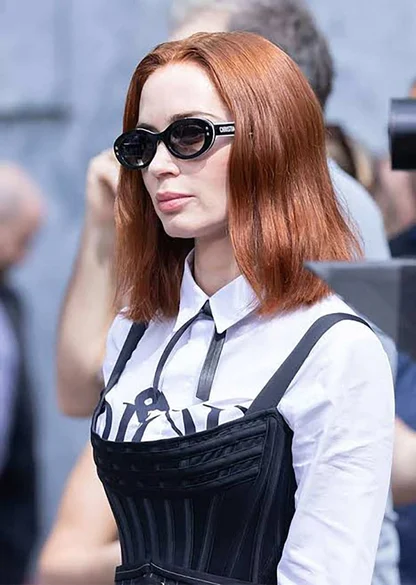
Photo: The Telegraph
The history of the pinstripe
During the 1980s the pinstripe became the power suit, closely tied to Wall Street and to characters like Gordon Gekko. Vogue has described the pin-striped suit as a symbol of authority, power and masculinity, later taken apart by designers who wanted to undo the old Wall Street uniform.
That is what is happening here. Emily Blunt and Meryl Streep are not wearing suits the way men do. They are taking a financial uniform made for men and using it for themselves.
Pinstripes also photograph well. On a red carpet they give movement without sparkle. On a talk-show sofa they give structure. In paparazzi pictures they make a body look longer and sharper. Next to soft gowns and sequins, a pinstripe looks expensive before you know the label.
For The Devil Wears Prada 2 it is the right message. Fashion media has changed. Magazines have lost some of their old power, luxury brands tell their own stories, influencers sit in the front row and print editors compete with algorithms. A pinstripe suit brings that business into the wardrobe. Fashion is fantasy, and it is also contracts, advertising, boardrooms and money.
Modern history
The pinstripe carries its history and still looks modern. It has survived bankers, gangsters, Hollywood stars, politicians, 1980s greed and 1990s bad tailoring. It keeps finding a new person to wear it with attitude.
For me, pinstripe is a classic textile all over the world. Invest in it.
The film was never really about clothes. It was about what clothes reveal: status, insecurity, taste, ambition, and who gets to decide what matters.
Miranda Priestly and Emily Charlton do not dress to be liked. They dress to be obeyed.